Happy students better grades
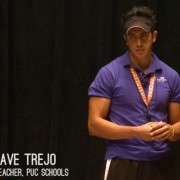
“I teach life in a class called P.E.” by middle school P.E. teacher Dave Trejo. Powerful real world application of improving a child’s emotional state with the added benefit of increasing their grades.
“I teach life in a class called P.E.” by middle school P.E. teacher Dave Trejo. Powerful real world application of improving a child’s emotional state with the added benefit of increasing their grades.

Leading up to our daughter’s first year in kindergarten, my wife and I debated the merits of public versus private school. I wanted public and she wanted private.
Now our daughter is in 3rd grade and we have experienced both. I can say with first-hand experience that neither public nor private schools are optimally designed.
Below are lessons I learned — and things that I set out to improve — when I launched Great Parents Academy with Cynthia Morneweck:
Lesson 1: Our schools have limited capacity to deal with kids of differing abilities.
Lesson 2: The learning pathway for children in today’s education delivery system is essentially a black box. Parents are often unaware of the details of their children’s educational pathway and their progress along that path.
Lesson 3: There is no early warning system to alert parents of problems.
Lesson 4: Very few tools exist to help parents augment their children’s education. Tools that coordinate with what children are learning in school are particularly lacking.
Lesson 5: Most children can learn material much faster than state guidelines would suggest is normal. The average child gets 180 hours a year of non-individualized learning time in a given subject. Increasing the amount of individualized teaching time by 20 minutes a day greatly accelerates learning for most children.
Lesson 6: The power of positive reinforcement and incentives has never been unleashed in education. If managed correctly, these powerful forces can strongly influence a student’s willingness to engage in learning exercises.
Lesson 7: In both private and public school settings, the teacher is the captain of the child’s education. With our daughter, my wife and I felt like we were essentially outsourcing our educational responsibility to the teacher. We wanted the reverse — we wanted to run the ship — but we wanted the teacher to navigate and collaborate with us more frequently and effectively to help our child reach her maximum potential.
Lesson 8: Commercial, corporate and community partners want to play a positive role in education reform. They have money and expertise in organizing resources. They should not be viewed as a threat to education, but rather, as one of the key constituencies in the educational ecosystem.
Lesson 9: Most parents, even those with kids in private school, are searching for ways to be more involved in their children’s education. But they lack the tools to efficiently organize their efforts. When parents sit down at the kitchen table to help their children with homework, they need to be organized and they need to know what to focus on. Attention spans are limited.
Lesson 10: It’s a simple truth: People of all ages spend more time with the things they enjoy. We wanted a learning system that combined tools for parents with a motivational, game-oriented platform to increase student engagement and mastery of subject matter.
The result of these lessons learned? Great Parents Academy — a web-based tool that addresses all of these challenges and opportunities. I can’t wait for you to try it, because I’m confident that it will change the way you and your child feel about learning.